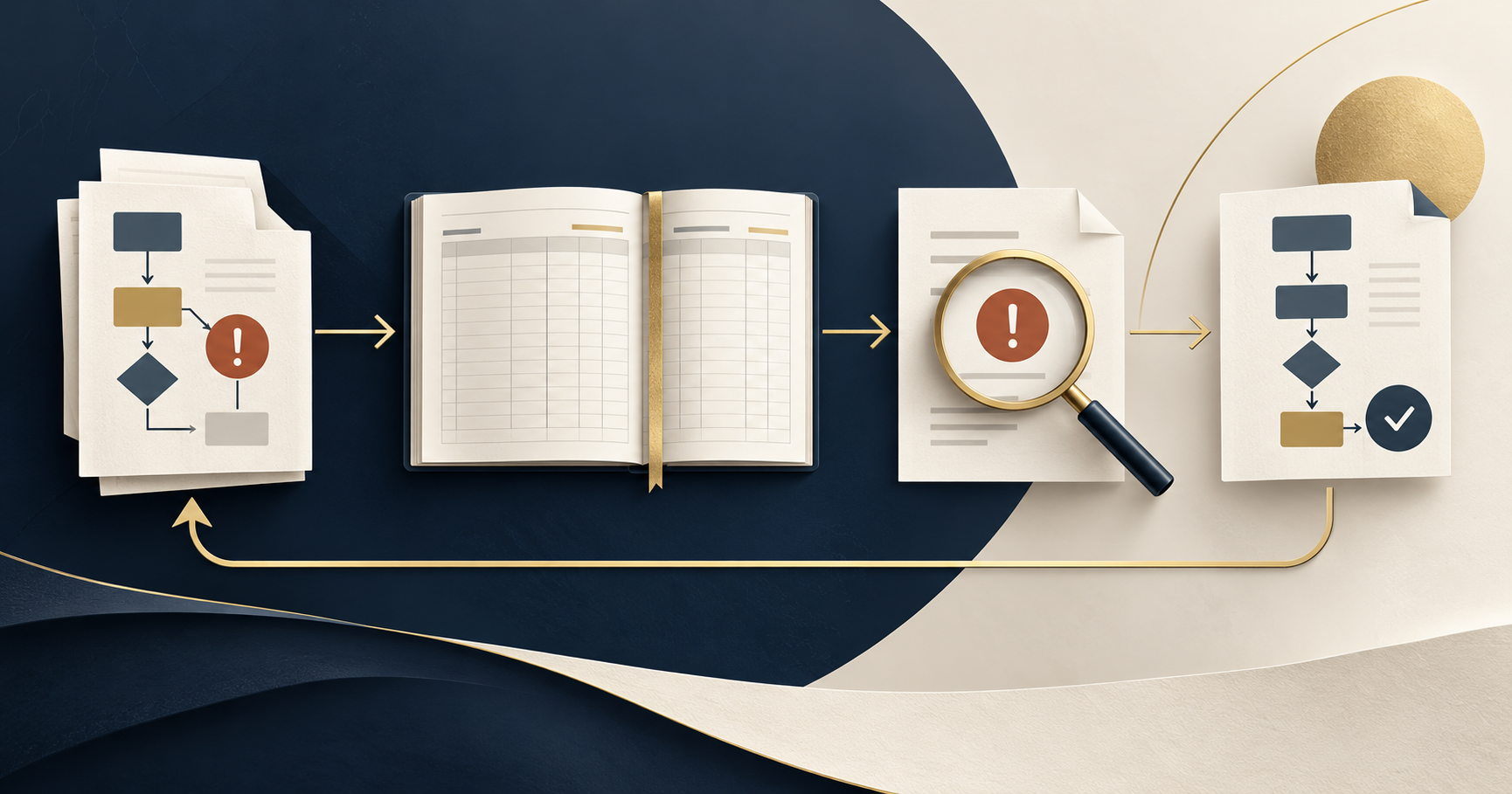
When the same account needs the same cleanup every month, the reconciliation may be identifying a symptom rather than correcting the cause.
A reconciliation should tell us whether an account is supported, complete, and reasonable. It is an essential control, but it is still a detective control. It usually identifies something after the transaction has already moved through the process and reached the general ledger.
That distinction matters when the same reconciling item returns month after month. The first response is often another spreadsheet tab, another reviewer, or another manual adjustment. Those actions may help close the current period, but they do not explain why the balance keeps becoming wrong.
The recurring entry is a symptom
Recurring issues often begin before anyone opens the reconciliation file. A transaction may be entered twice. Supporting documentation may arrive late. Ownership may be unclear. A mapping may send activity to the wrong account. A review may occur only after the posting deadline.
The adjusting entry corrects the record for that period. It does not correct the behavior, configuration, or handoff that created the error. When the cause remains, the accounting team becomes very efficient at repairing the same problem.
Look upstream
Ask not only, “What makes this balance wrong?” Ask, “What allowed the incorrect activity to reach the ledger?”
- Ownership: Who is accountable for the transaction, support, and correction?
- Timing: Does review occur early enough to prevent or correct the posting?
- Documentation: Can another person understand why the transaction occurred?
- System logic: Are mappings, interfaces, templates, and recurring entries behaving as intended?
- Communication: Did the process fail at a handoff between teams?
The purpose is not blame. It is finding the earliest practical point where the process can become more reliable.
Prevention has to be operable
“Be more careful” is not a control. A named owner, required field, automated validation, documented review, or clear cutoff creates something a team can follow and evaluate.
After the change, the next reconciliation provides evidence. If the item disappears, the team has reduced rework. If it returns, the cause may have been misidentified or the corrective action may not be operating consistently.
Correcting an entry closes one issue. Correcting the process protects the next close.
Educational personal perspective only. Not accounting, audit, legal, tax, or government-contracting advice.